
The Making of a Misunderstood Monster
The Hunchback of Notre DameThis supporting thread traces how Quasimodo’s body and social treatment produce the frightening public image that conceals his capacity for tenderness.
increasing Bearing strength in each event
 decreasing
Bearing strength in each eventdecreasingThe Child Called Almost
A Body Judged at Birth
A foundling’s appearance
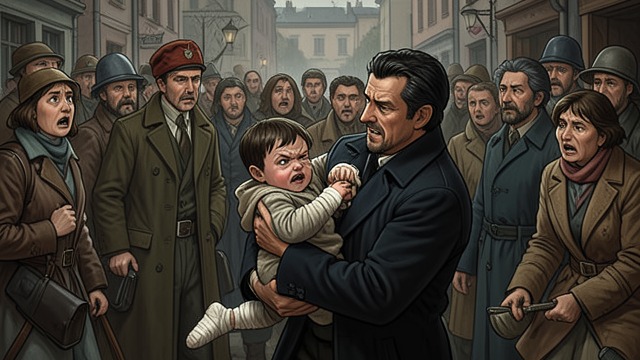
The child is described as deformed and is treated by onlookers as a monster rather than a person. Their fear quickly turns toward calls for rejection.
Adoption against the crowd
Claude takes him away and names him Quasimodo. The child’s life begins under the sign of other people’s judgment, but also under one person’s compassion.
The Cathedral’s Creature
Body and Building
Habits of the towers
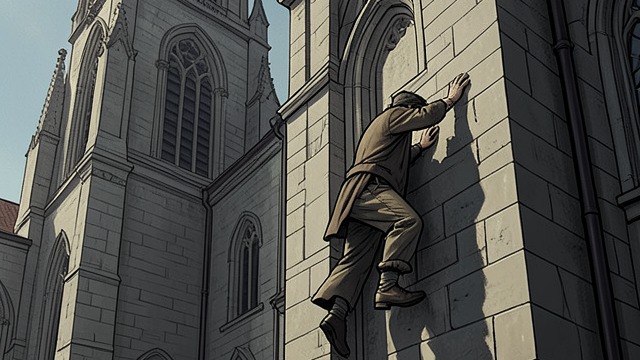
Quasimodo climbs, moves, and works within Notre-Dame as naturally as another person moves through a home. His body seems shaped to the architecture.
A mistaken identity
The people imagine him as a demon of the cathedral. Their superstition turns his familiarity with the building into evidence against him.
The Public Target
Ridicule as Social Habit
A grotesque election
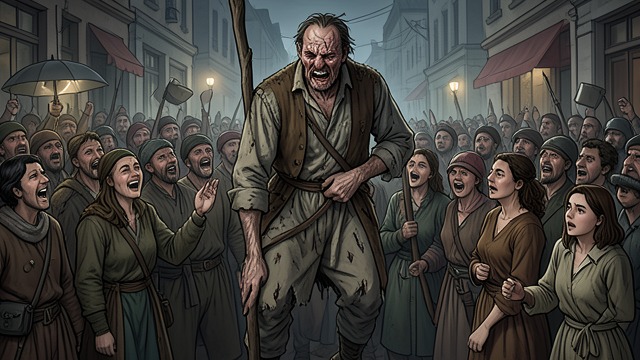
The crowd makes Quasimodo Pope of Fools because of his face. His brief public triumph is inseparable from the mockery that defines the ceremony.
Fear beneath laughter
His strength commands a measure of respect, but women and men still treat him as monstrous. The crowd’s amusement can turn rapidly into violence.
The Pillory’s Mirror
Cruelty Returned to Him
The punished spectacle
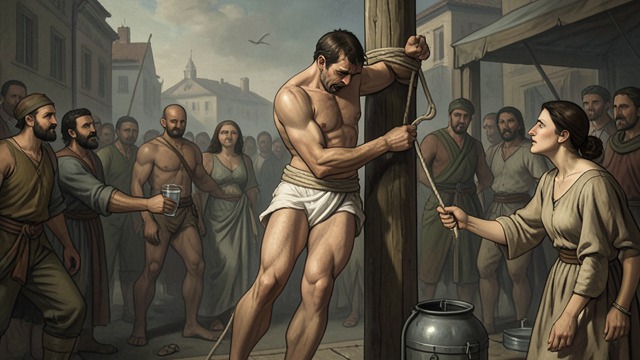
Quasimodo is stripped, whipped, and displayed before the same public that celebrated him the previous day. His body is again made into a spectacle for others.
Compassion breaks through
Esmeralda gives him water and sees suffering where the crowd sees ugliness. Her action reveals the moral choice hidden inside the public scene.
The Protector’s Dignity
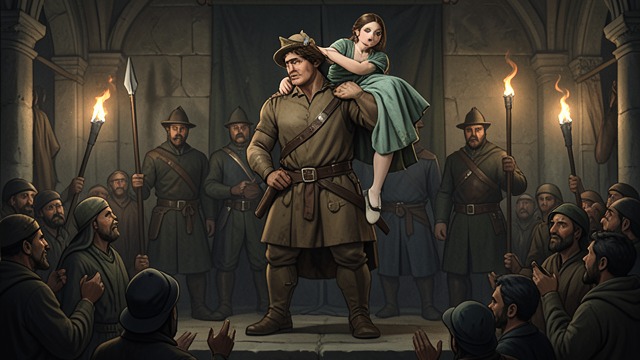
Strength Reinterpreted
A courageous rescue
Quasimodo defeats the executioners and carries Esmeralda into Notre-Dame. His physical power becomes an instrument of protection.
A changed public image
The crowd sees a beauty in him that his body never received from them. His courage briefly overturns the social judgment that made him an outcast.
Quasimodo Sunday, 1467
Quasimodo’s youth and early adulthood
January 6, 1482
January 7, 1482
The day of Esmeralda’s public penance
